Featured
Table of Contents
The difficulties of the 21st century demand both the requirement for boosted self-awareness, and the life-affirming interconnectedness with household, job, pals, and society overall. Granted, because we are all extremely various people, one's demands for connectedness at the workplace may pale in contrast to the connections with society generally.

Over the past a number of years, research has exposed that it is as reliable or extra reliable than behavior therapies such as cognitive-behavioral therapy (CBT). Psychoanalytic specialists stress that the treatments which address various psychological wellness problems by checking out subconscious issues are specifically efficient for those experiencing multiple individual, monetary, and social stressors.
The concepts of depth psychology are essential to the totality of human experience, not simply those with identified psychological health disorders. The theoretical structures of deepness psychology hold firmly to the worth of exploring the subconscious and bringing it into mindful recognition. We are all part of a world in which we must really feel linked with the workplace, community, and culture in which we live.
2 of these, the personality and the anima/animus, are relational; the persona associates with the outside world, and the anima/animus to the interior globe. The ego, which is primarily body-based and might be comprehended as the executive component of the character, stands alongside the darkness, and these 2 are to do with our identity.
Typical Misconceptions About Depression therapy
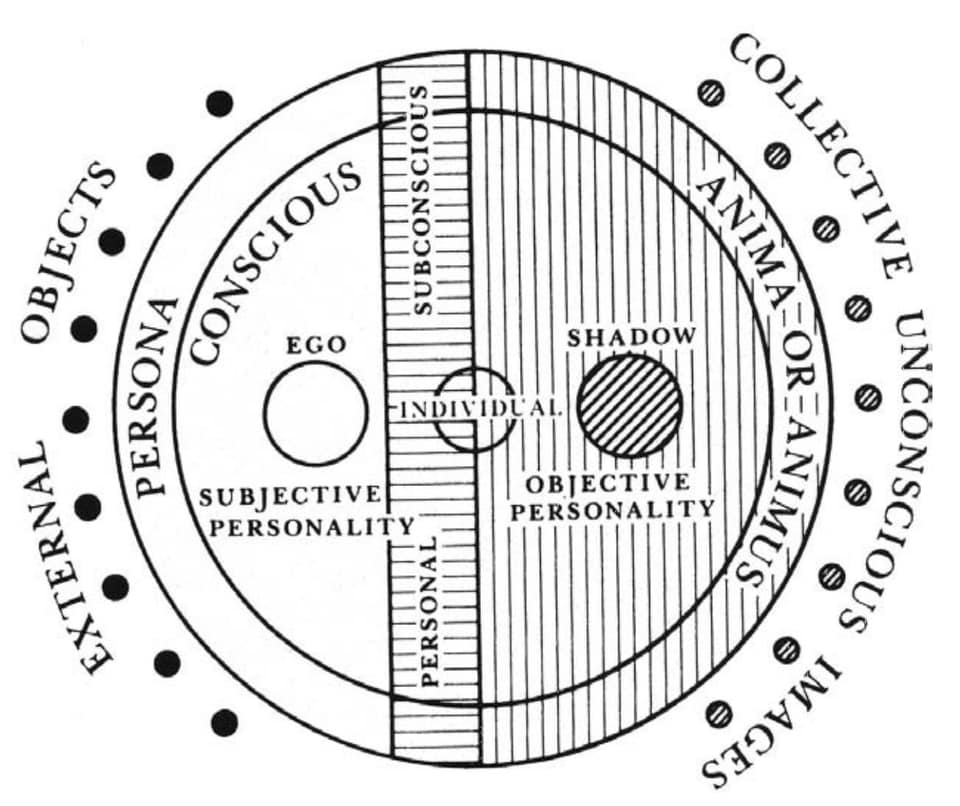
As an example, a person may think that to be assertive is to be egocentric; so he undergoes life being bossed around by others and deep down fuming with animosity, which consequently makes him feel guilty. In this instance, his capacity for assertiveness and his bitterness both develop component of his shadow.
It may be useful to think of the darkness in an upright method. At the top is the individual shadow it might really feel instead black, formless and underdeveloped in addition to undesirable and disowned. Yet, as we have seen, whilst it may really feel like a cess-pit it can also be a prize chest.
How Trauma-Focused Treatment Addresses Dissociation
This, like the personal shadow, is family member in that it will remain in part culturally determined. It includes that which opposes our aware, shared and cumulative worths. For instance, female circumcision serves in some societies; and abhorrent to members of other social teams. Something like paedophilia, nonetheless, is a disobedience of a taboo, which seems to be universally promoted.
The problem of wickedness is one that Jung explored through his document with the Dominican, Fr Victor White, and through his works, specifically "Solution to Task". It is a significant topic which is past the extent of this intro. Just how is the shadow run into? Often in forecast onto some other individual/family/group etc.
I may start to observe that a great deal of other individuals are rather money grubbing, as an example. And I might start to feel censorious or judgmental concerning their greed. With luck, it might dawn on me that, what I am disliking in others is in fact something with which I struggle within myself.
What are a few of the disowned facets of the psychosomatic unity that we call a person? The body is a good place to start. Its type is bothersome for some people, that do not really feel literally joined-up; others do not like or despise their shape and most likely to alarming sizes to transform it; others feel fairly incorporeal.
Why Ego-State Therapy Supports Depression therapy
After that there are sexuality and sex and their accompanying stress and anxieties and stress. In regards to human growth, when babies can experience, appreciate and live in their bodies, they can after that learn, with their mother's aid, exactly how to convert sensations right into impacts. For instance, "butterflies" in the stomach can suggest "I am nervous/feeling shy/afraid of that authority figure etc".
Lots of people that look for treatment come with an entire number of feelings secured behind a defensive wall of armouring, which protects against closeness with themselves and others, true affection and dispute. Positive and negatives feelings are forecasted onto those around them, and with the estimate goes the capability to believe clearly regarding circumstances and connections.
It leaves out pity; we all often tend to feel embarrassed of our shadow, some cripplingly so. In the very early chapters of his autobiography, Jung makes frequent reference to his mother's use embarassment as a way of self-control. However neither Freud nor Jung paid much attention to shame, although they both endured greatly from its results.
For the darkness to arise without overcoming the vanity with the harmful effects of embarassment, we each require a various relational and emotional setting; evaluation, psychotherapy, counselling every one of these offer such an atmosphere in various methods. The therapist provides constant favorable regard, expressed in part with a commitment to dependability, connection and the wish to share his/her understanding of the client's internal and external globe with the client.
How Early Intervention Is Critical for Image Transformation therapy in Dalkey, Ireland
The individual starts to rely on the therapist; and this count on grows when darkness aspects of the client entered into the healing relationship, where they are approved with empathy and efforts at understanding. If all goes well enough, they are exempt yet once more to displeasure, reproaching or denial, and the energy which is locked within them is launched.
This process, the adaptation of the darkness, causes self-acceptance and self-forgiveness. Grievance and blame pave the way to the taking of duty and attempts at sorting-out what belongs to whom. A tough principles, which often tends to be self- and other-punitive can kick back, and individual values can be established in counterpoint to collective morality.
The trickster is finest portrayed, probably, by the figure of Hermes, who gave Pandora ('the all-gifted one') audacity and shrewd. In Western society it is the wolf that brings us near the globe of darkness at its even more sensual degree. De Vries (1984) mentions the stereotypical qualities of the wolf: untamed nature, fertility, desire, cruelty, murderousness, avarice; "the diabolical, melancholic hungry" that can seize even more humane qualities.

Latest Posts
Nutritional Counseling Integration with Obsessive-Compulsive Disorder
Personal Worth through Cultural Transition
Addressing Comorbidity Through Anxiety